
Pressure Washing in Reading for Driveways, Patios & Paths
Professional exterior surface cleaning for suitable driveways, patios and paths across Reading. Every job is assessed for the surface, condition, drainage, access and finish required before a method is agreed.
Surfaces Considered for Cleaning
These are the hard surfaces actually cleaned as part of this service. Suitability is confirmed on site — a surface being on this list does not guarantee it can be washed in its current condition.
Block paving driveways
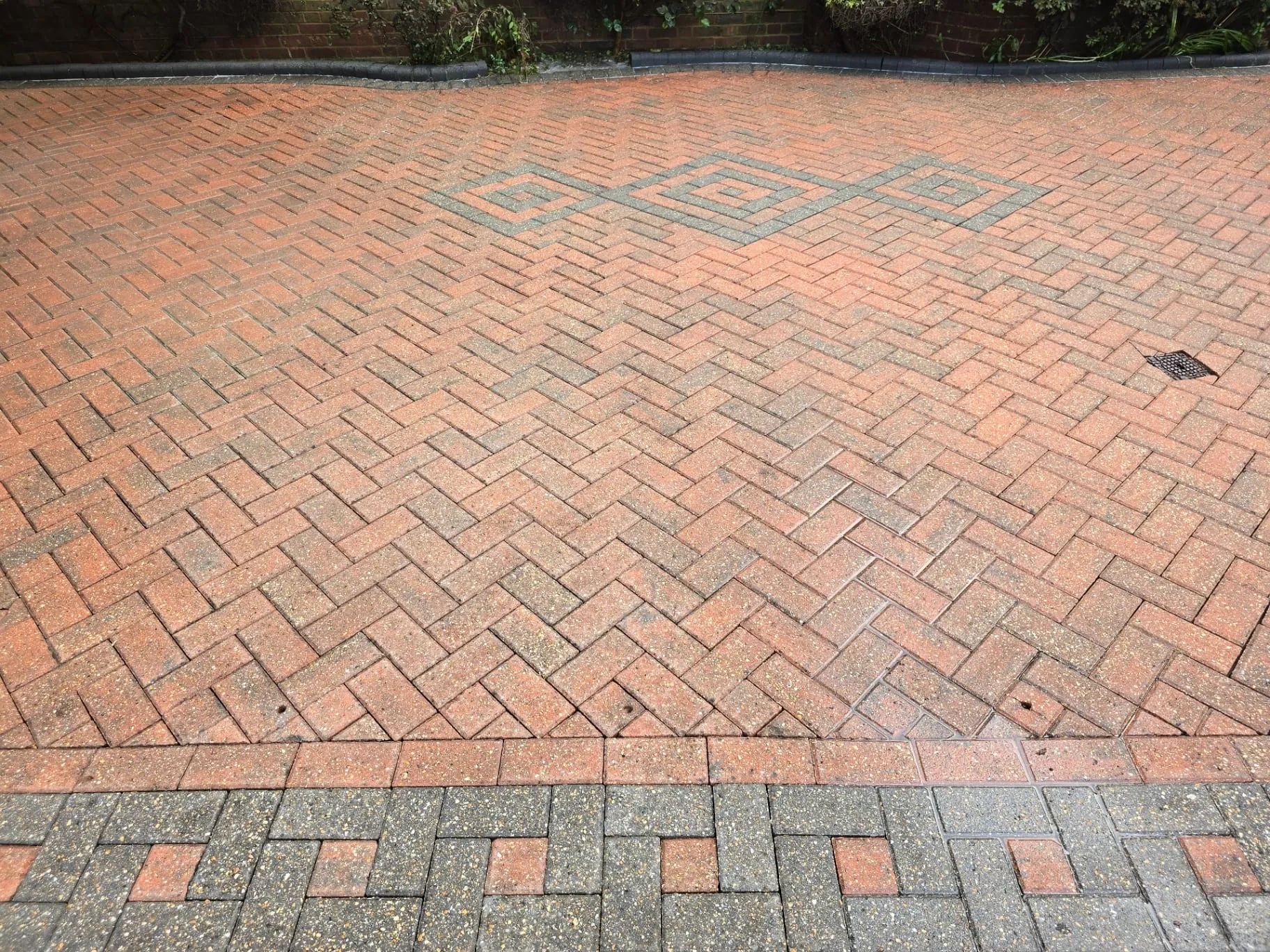
Concrete block and brick paviours, including edge courses and channel drains, where the blocks and joints are sound enough to be washed.
Concrete drives, paths and hardstanding
Poured and slab concrete, including paths, bin stores and side returns. Surface condition is checked for spalling or crumbling before quoting.
Paving slabs and natural stone patios
Concrete slabs, Indian sandstone, limestone and similar. Softer stone and older pointing are treated at lower pressure or declined where the risk is too high.
Porcelain and modern paving
Hard-wearing porcelain and vitrified paving, cleaned at controlled pressure with attention to the jointing compound between units.
Steps, paths and pathways
Front paths, side paths and steps, where slip risk from algae is usually the reason the clean is booked.
Tarmac — assessed case by case
Tarmac and asphalt can be loosened by high pressure. It is only cleaned where the surface is sound, and at a reduced pressure suited to the binder.
Why Surface Assessment Matters
Most damage caused by pressure washing comes from using one setting on every surface. The assessment exists so the method is chosen for your property rather than for convenience.
- Material — the same pressure that suits concrete can scar sandstone, tarmac or aged slabs.
- Condition — loose pointing, cracked units, spalling concrete and failing sealant can all be worsened by washing.
- Drainage — where the water and dislodged dirt will run, and whether gullies, channels or soakaways can take it.
- Access — gate widths, distance from a water and power supply, steps, levels and parked vehicles.
- Surroundings — render, doors, garage seals, planting, fencing and neighbouring property that must be protected or avoided.
- Finish required — an even, uniform result across the whole area matters more than a single dramatic patch.
The cleaning method must suit the surface. A quotation may be declined or adjusted where strong pressure could damage loose pointing, fragile material, failing seals, coatings or surrounding property.
Pressure Washing Versus Lower-Pressure and Chemical Methods
Pressure is not appropriate for every material. High pressure removes dirt by force, and on the wrong surface it removes the surface with it — eroding soft stone, stripping the binder from tarmac, blowing out weak pointing and driving water behind seals. The method is chosen after the surface is assessed.
Rotary / flat-surface pressure cleaning
A rotary surface cleaner keeps the jet at a fixed distance and passes evenly across the area. This suits sound concrete, block paving and durable slabs, and avoids the striping caused by a hand lance held too close.
Reduced-pressure cleaning
Pressure is dropped, and the lance held further back, on softer or older material. It is slower, and the finish is a genuine clean rather than a resurfacing — but the surface is not eroded in the process.
Chemical / soft-wash treatment
Some staining is biological rather than dirt. Applying a suitable treatment and letting it work removes algae and green growth on materials where pressure alone would cause damage.
Cleaning chemicals and wash water are used carefully and directed away from planting and open drainage where possible, but no exterior cleaning method is entirely without environmental impact. Where a treatment is proposed, you are told what it is for before it is used.
The Working Process, From Quotation to Clean-Up
1. Assessment and quotation
The area is measured and the material, condition, drainage, access and surroundings are checked. You are told the method proposed, what is included, and anything that will not be attempted — before a price is agreed.
2. Preparation and protection
Loose debris, garden furniture, pots and obstructions are moved where practical. Adjacent doors, seals, render and planting are protected or avoided. Water and power supply points are agreed with you.
3. Pre-treatment where needed
Heavy algae, moss or lichen is treated first so it lifts under a lower pressure rather than being forced off with a stronger jet.
4. Cleaning in controlled passes
The surface is cleaned in overlapping passes at the pressure agreed for the material, working with the drainage rather than pushing slurry into the wrong places.
5. Detailing edges and joints
Edges, steps, channels and awkward corners are worked by hand, since these are the areas a flat-surface cleaner cannot reach evenly.
6. Rinse, clear-up and inspection
Displaced silt and debris are rinsed and cleared from the working area, furniture is replaced where it was moved, and the finished surface is walked with you or reported back.
Treatment, Weed Removal and Re-Sanding: What Is and Is Not Included
Nothing here is assumed. Each item is either part of the quoted clean, priced separately, or not offered at all — and your quotation says which.
Cleaning of the agreed surface
IncludedThe quoted area is cleaned using the method set out in the quotation.
Removal of loose weeds and growth dislodged during cleaning
IncludedWeeds and moss lifted by the wash are cleared from the surface as part of the clean-up.
Chemical weed or algae treatment
Quoted separatelyWhere a treatment is wanted beyond what the clean removes, it is priced and agreed before it is applied.
Kiln-dried sand re-sanding of block paving joints
Optional, quoted separatelyNot automatically included. If you want joints re-sanded after cleaning, say so and it is added to the quotation as a separate line.
Sealing of driveways or patios
Optional, quoted separatelyOnly carried out where the surface is suitable and fully dry, and only when agreed in advance. It is never assumed to be part of a clean.
Re-pointing, repairs, resurfacing or relaying
Not offeredDamaged pointing, sunken blocks, cracked slabs and failed tarmac are building work, not cleaning. They are reported to you, not repaired.
Underground drainage or soakaway work
Not offeredBelow-ground drainage falls outside the service entirely.
Cleaning improves the appearance and condition of a surface. It does not make worn or damaged material new, and results vary with the age and porosity of what is being cleaned.
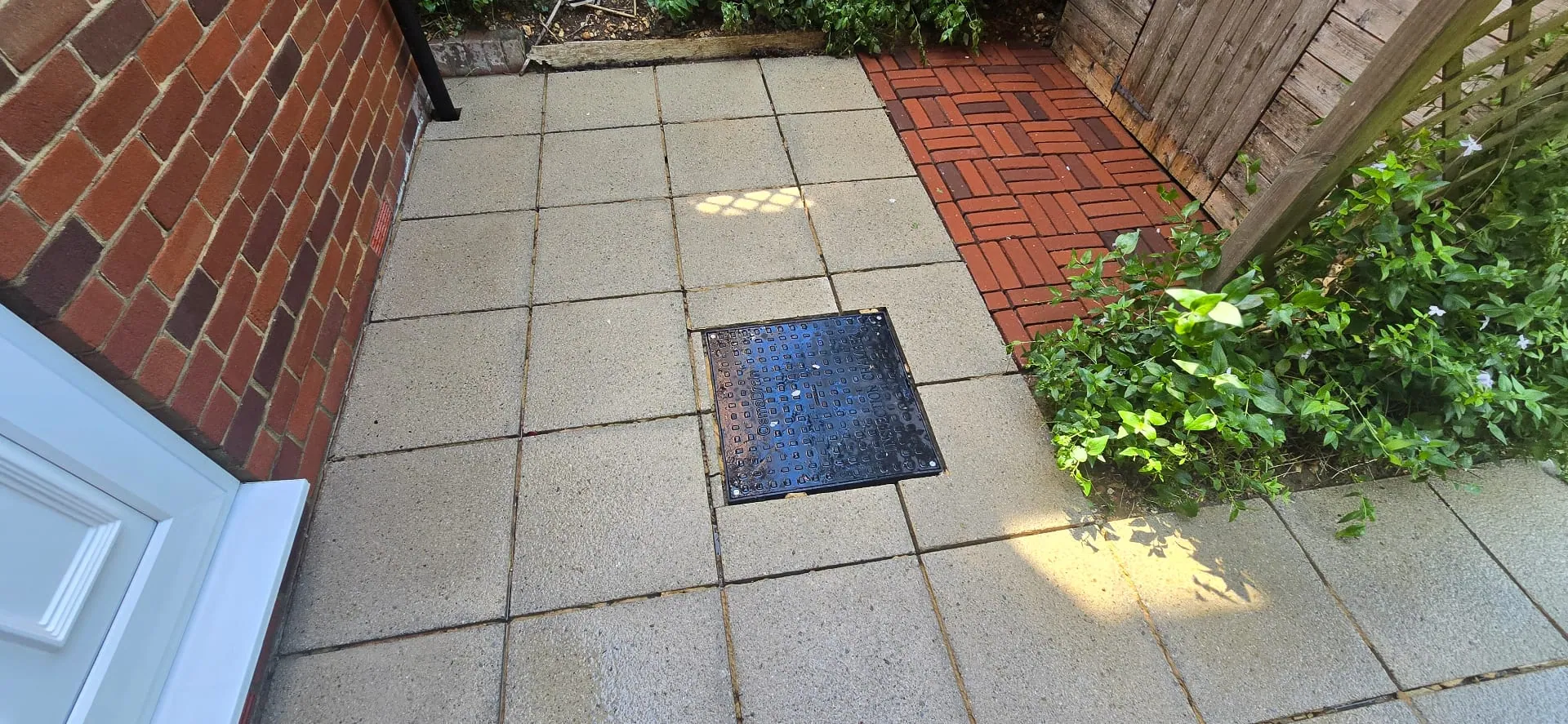
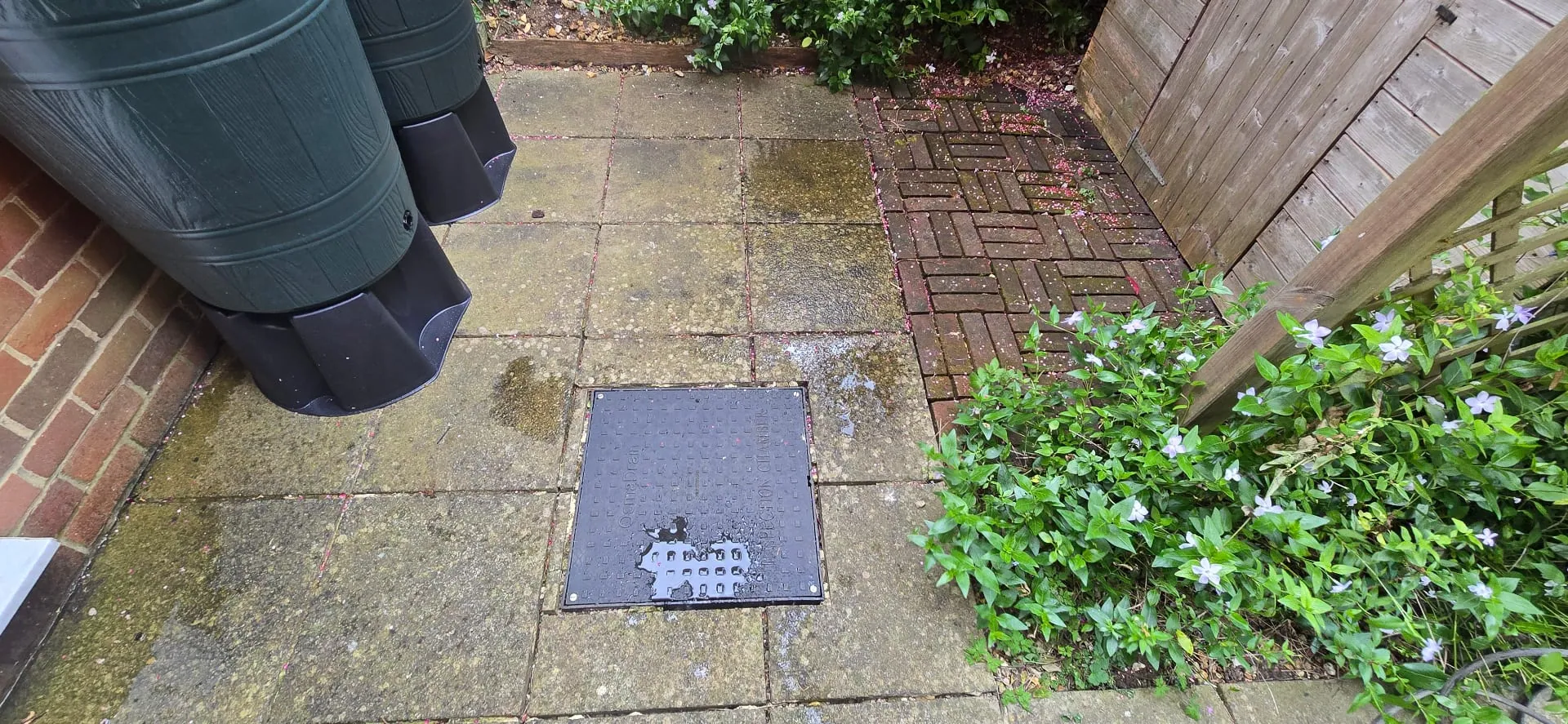
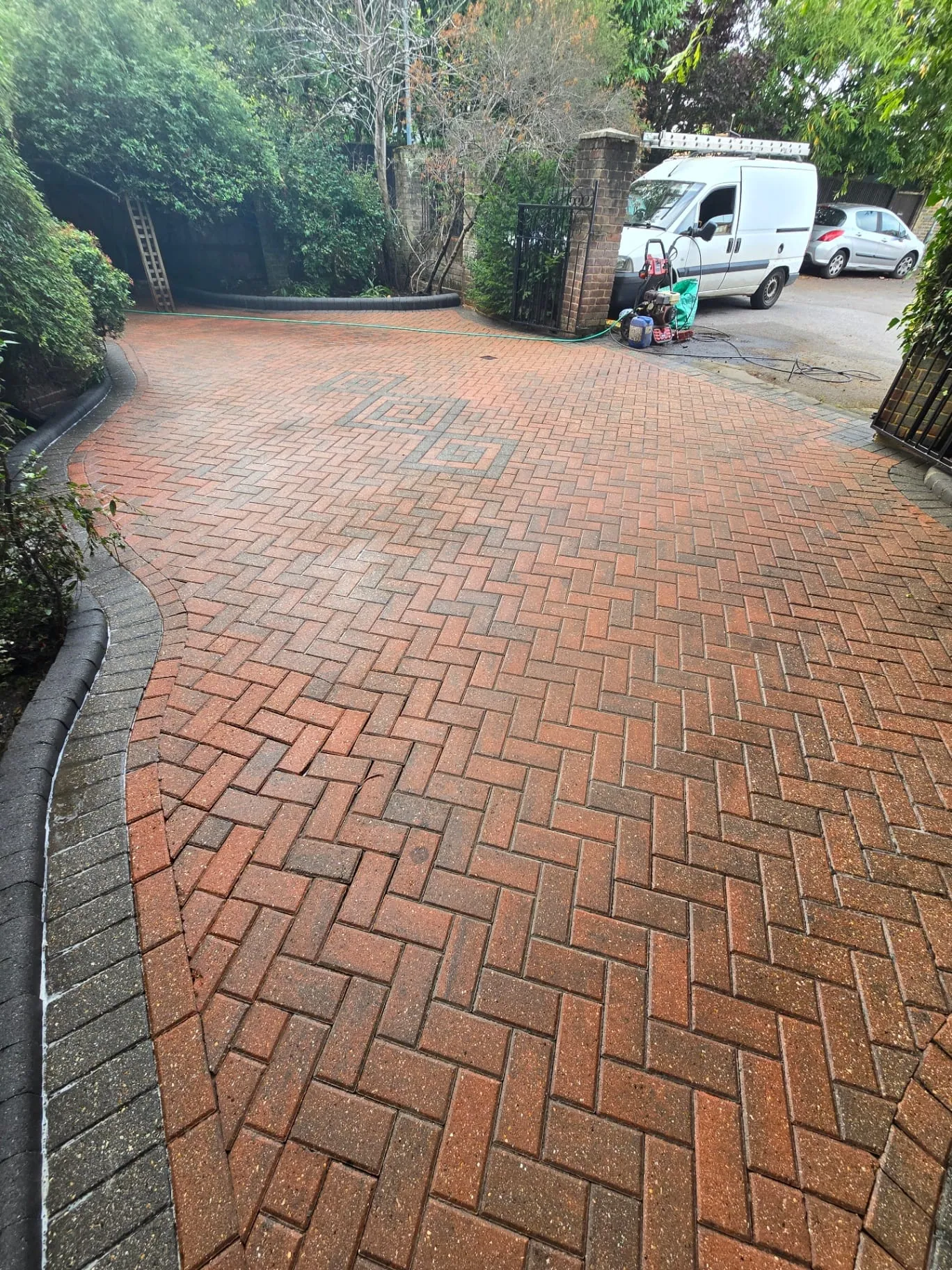
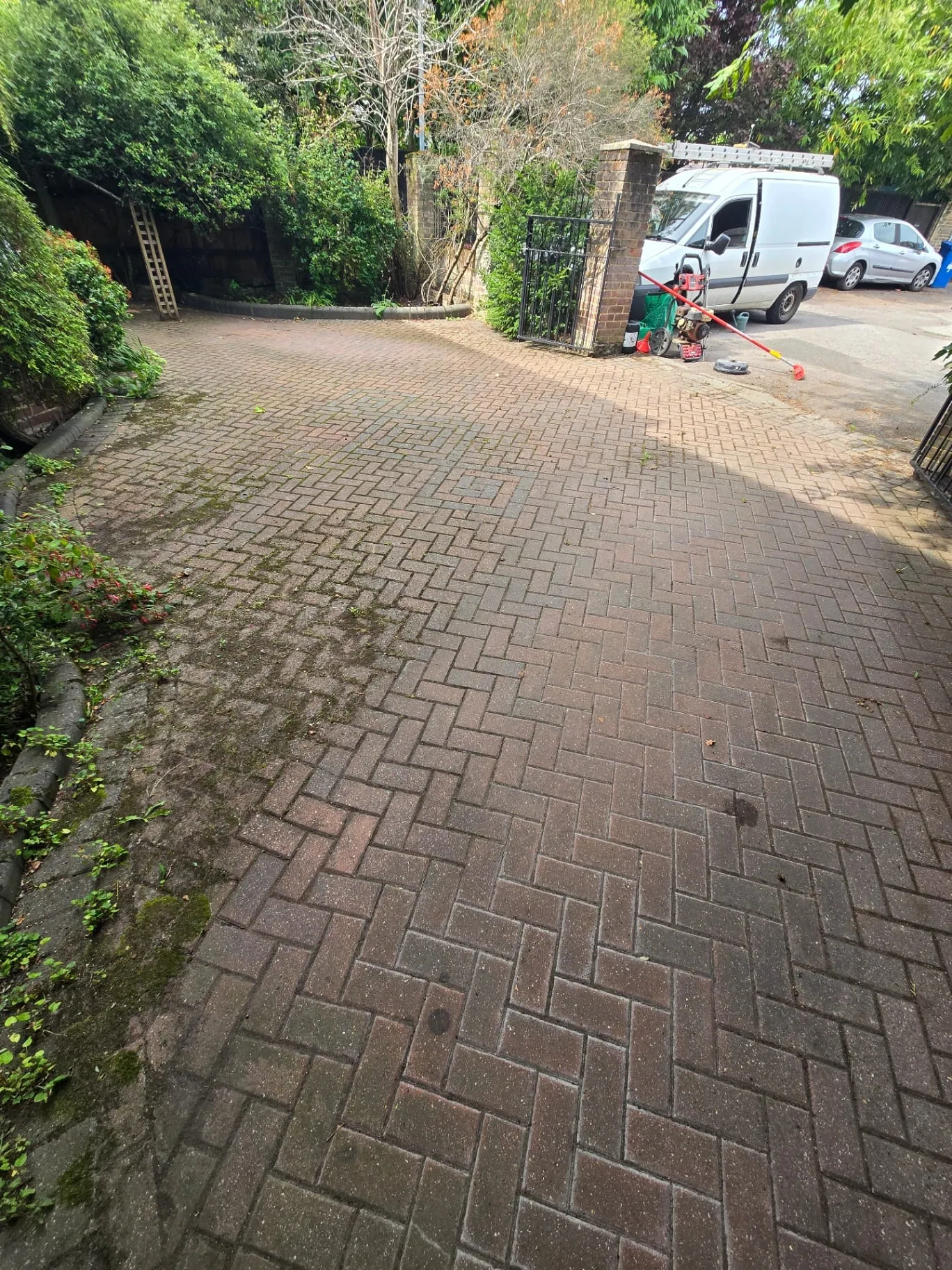
Before & After From Real Jobs
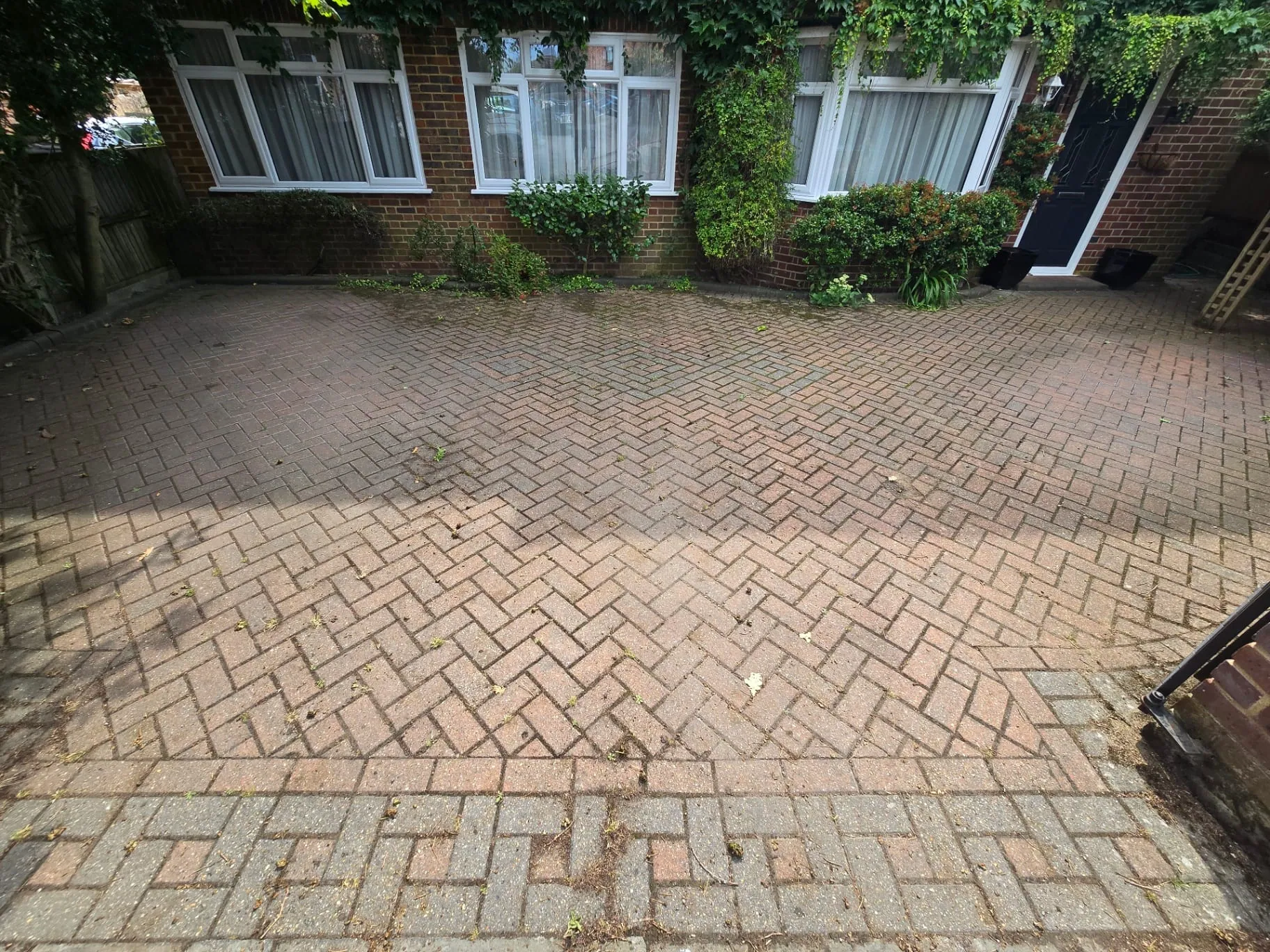
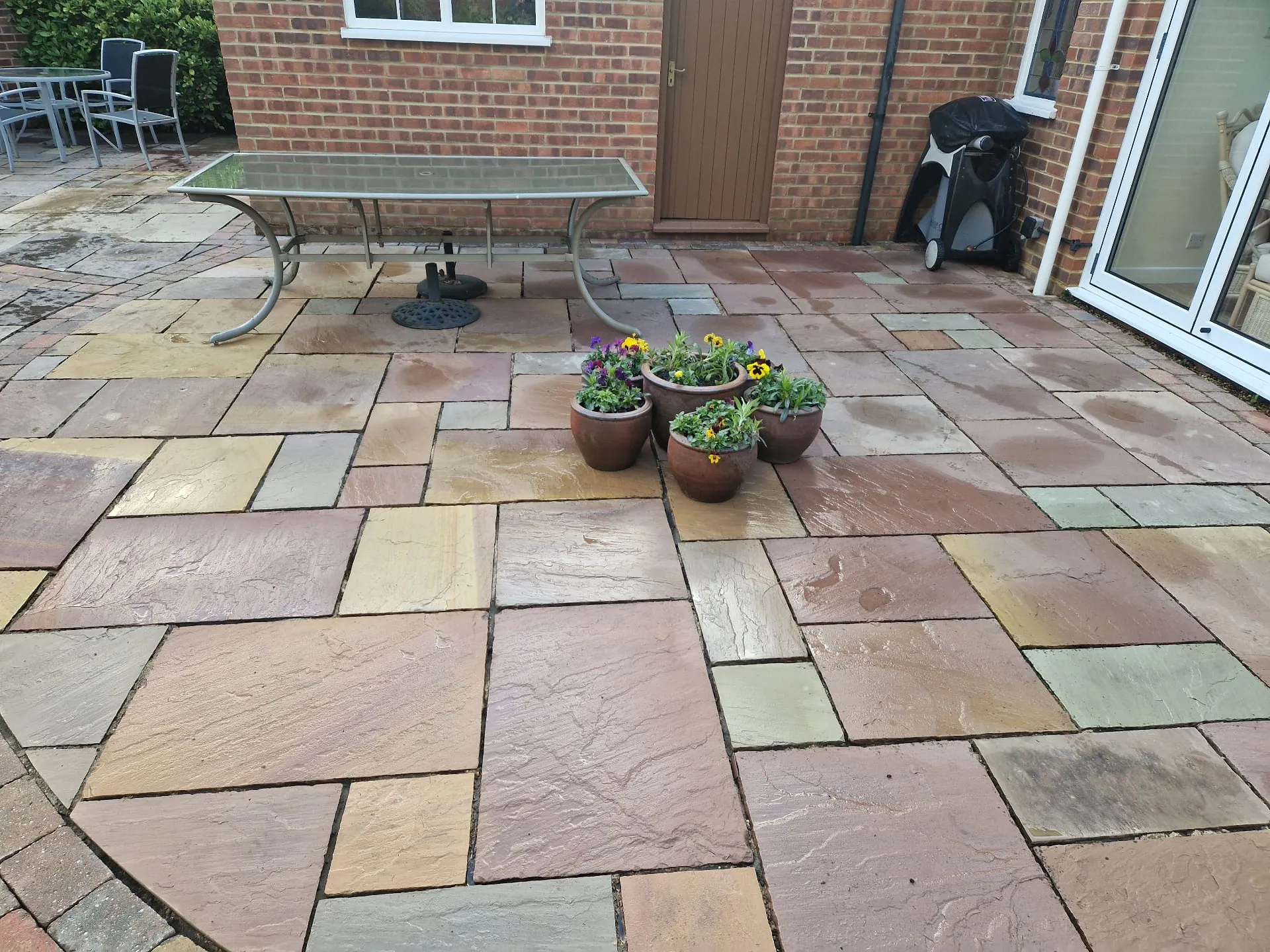
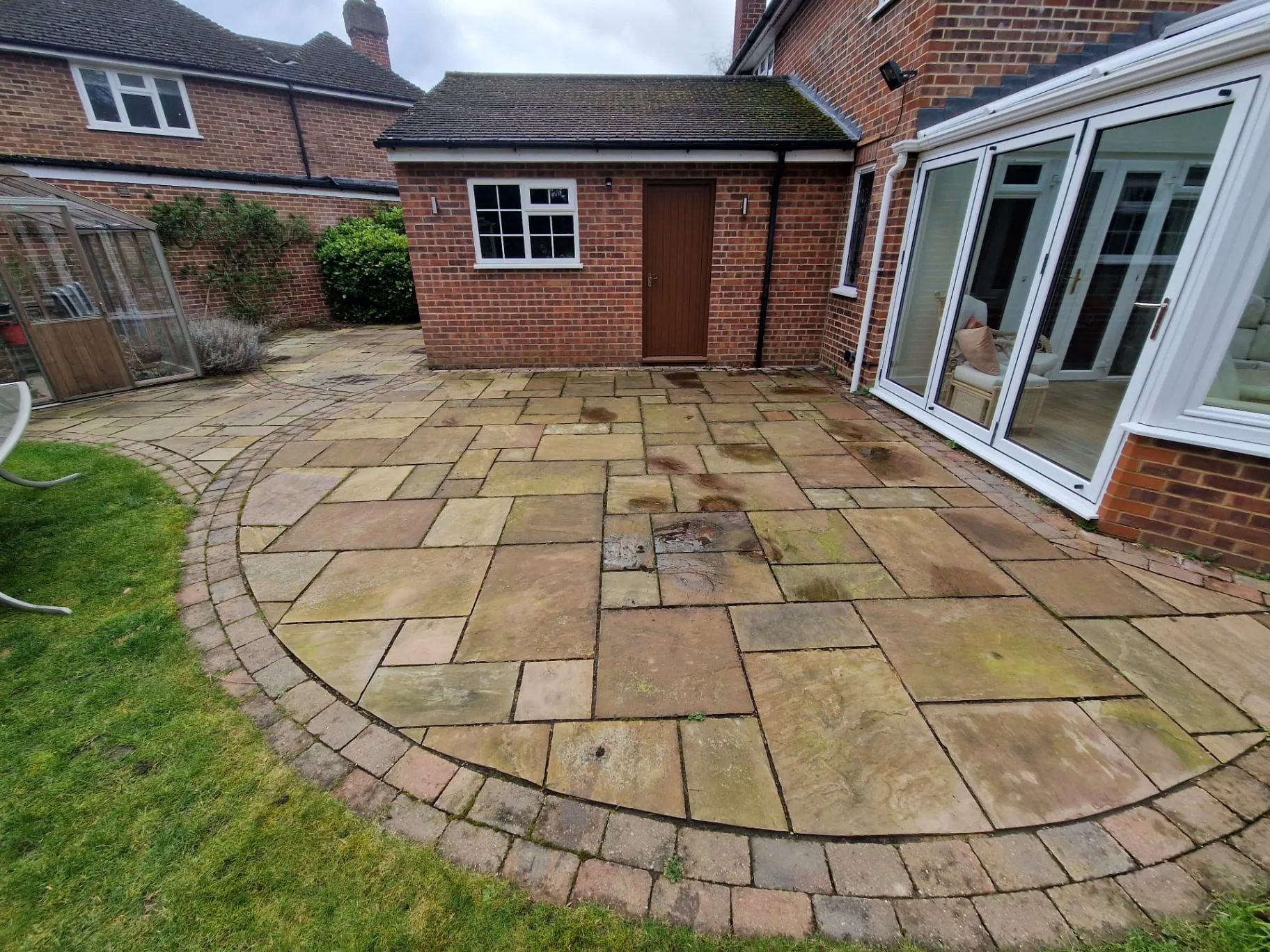
Photographs from hard-surface cleaning carried out on local properties. Drag each slider to compare.
Factors Affecting Price
Hard-surface cleaning is quoted per property rather than from a fixed list, because these factors change the time, method and equipment needed:
- Total area in square metres
- Surface material and how much care the method requires
- Condition — light algae versus years of ingrained dirt, moss and lichen
- Access — gate widths, distance from water and power, steps and level changes
- Drainage and where the runoff can safely be directed
- Protection needed for doors, seals, render, planting and neighbouring property
- Optional extras agreed in advance, such as re-sanding, treatment or sealing
Pressure Washing FAQs
Detailed Service Pages
Driveway Cleaning in Reading
Block paving, concrete and hard-surface drives — material, drainage, edge restraints and joint re-sanding covered in detail.
Patio Cleaning in Reading
Stone, slabs and paved seating areas — joints, furniture and access, runoff control and aftercare covered in detail.
Priority Coverage Areas
Alongside Reading itself, pressure washing is available in these nearby areas:
Get a Property-Specific Quote
Tell us the surface, roughly how large it is and what condition it is in, and you will get a clear quotation with the method and scope set out before any work is booked.
Having the glass done at the same time? Take a look at our window cleaning service in Reading. Walls are a different job to hard surfaces — rendered elevations are softwashed rather than jet washed, which we cover on our render cleaning page.
Owner-operated and fully insured, working across Reading and nearby areas.